


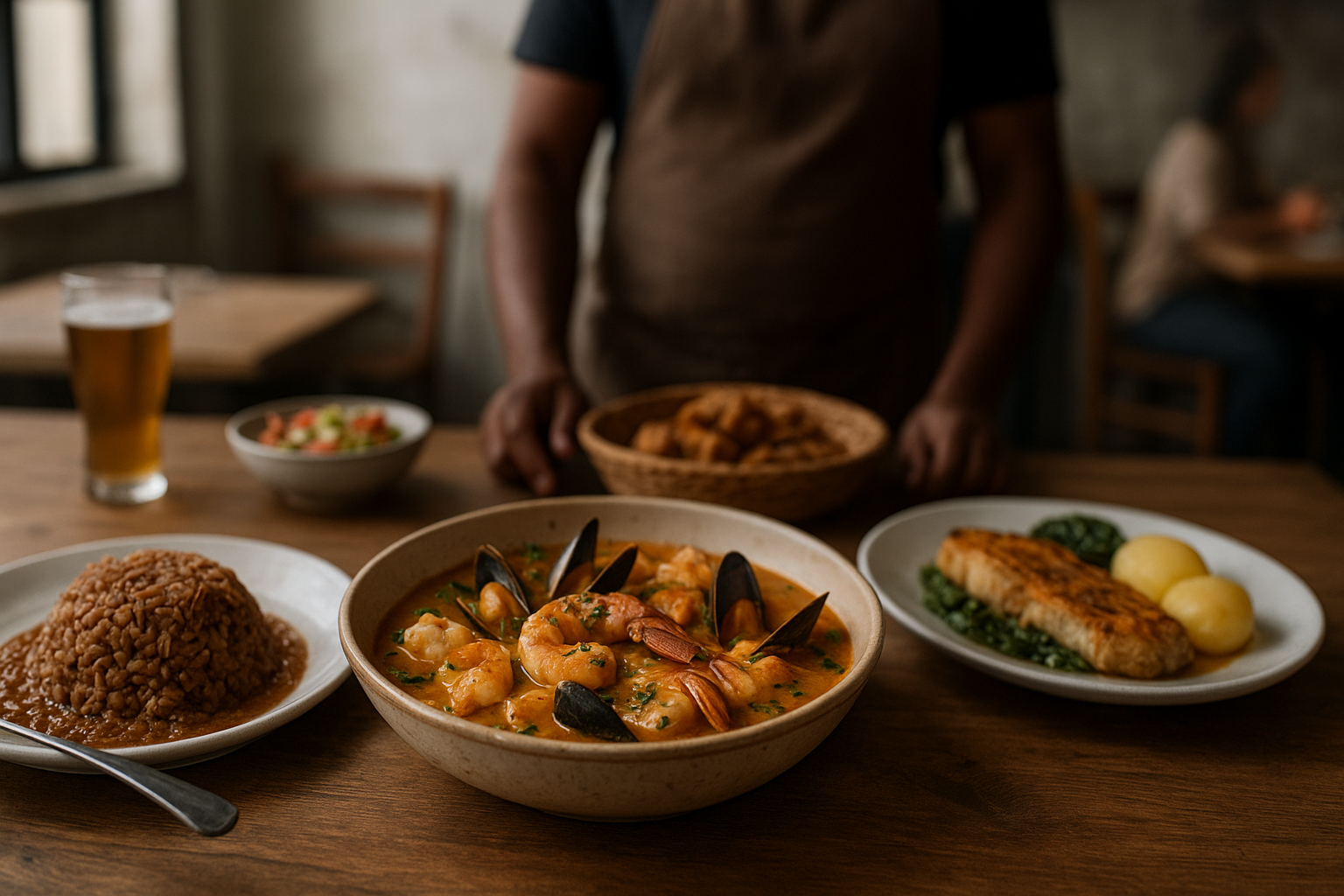
Cape Verde food experiences offer a delicious gateway into the archipelago’s rich culinary identity, shaped by the sea, Creole traditions, and centuries of cultural fusion. From hearty stews to fresh seafood and tropical sweets, each dish reflects the soul of the islands. Whether you’re wandering through local markets or sitting by the ocean, the country’s gastronomy invites you to slow down, savour, and connect with its people. In this guide, discover the flavours, rituals, and signature dishes that make Cape Verde an unforgettable destination for food lovers.
Why Cape Verde food experiences are unlike any other
Cape Verde’s cuisine is born from scarcity, creativity, and cultural blending. Located in the middle of the Atlantic, the islands have long relied on what the land and sea offer, making each meal a tribute to resourcefulness and simplicity. Corn, beans, and fish form the foundation of traditional dishes, but African, Portuguese, and Brazilian influences enrich every plate. This mix results in food that is both rustic and deeply satisfying. Cape Verde food experiences stand out because they reflect not only flavours but also stories—stories of migration, resilience, and identity. Whether you taste a slow-cooked stew or a fresh grilled lobster, you will feel the heritage behind each ingredient.
Signature Cape Verde food experiences every traveller should try
No exploration of the archipelago’s gastronomy is complete without its most iconic dishes. Cachupa, the national dish, is a slow-cooked mix of corn, beans, vegetables, and either fish or meat. Its comforting richness makes it a highlight for visitors. Another must-try is pastel com diablo dentro, a fried pastry filled with spicy tuna, perfect as a quick snack. Seafood lovers will appreciate lobster, grouper, and moray eel, often prepared simply with garlic and fresh herbs. These dishes showcase the islands’ maritime heritage and the unmatched freshness of its waters. For travellers seeking local recommendations, many options are listed on local dining guides, offering insights into where to experience these dishes in their most authentic form.
Exploring seafood traditions across the islands
Being an Atlantic nation, Cape Verde celebrates fish in countless ways. In coastal towns, you’ll often see fishermen returning with their daily catch, feeding directly into local restaurants. Tuna, limpets, octopus, and swordfish are staples, often prepared with minimal seasoning to preserve their natural flavour. Grilled octopus with sweet potatoes is a popular option, combining land and sea in perfect harmony. Lobster from the island of Boa Vista is particularly renowned for its tenderness. Seafood stews, flavoured with palm oil and aromatic herbs, bring warmth and comfort to evening meals. Curious food travellers can trace the origin of many seafood dishes by consulting global culinary resources such as TasteAtlas, which highlights traditional preparations from around the world.
Corn, beans, and the heart of traditional Cape Verdean cuisine
While seafood plays a major role, Cape Verdean culinary identity is also deeply tied to corn and beans, the building blocks of many traditional recipes. These ingredients appear in soups, porridges, and especially in cachupa. This dish varies significantly from island to island, with some versions using pork, others fish, and others chicken. The slow cooking enhances the flavours and creates a comforting, home-style consistency. Corn-based couscous, known locally as cuscuz, is another specialty, usually served at breakfast with butter or honey. This versatile staple highlights the islanders’ ability to transform humble ingredients into satisfying meals.
Sweet treats and Cape Verdean desserts worth discovering
Cape Verde’s tropical climate influences its desserts, many of which feature papaya, coconut, and local honey. One beloved treat is doce de papaya, a sweet papaya jam often enjoyed with fresh goat cheese. Another favourite is pastéis de leite, milk tarts reminiscent of Portuguese custard desserts but with a distinct Creole touch. Sugarcane also plays a role, particularly in grogue-based desserts, where the islands’ traditional sugarcane rum brings depth and warmth. Whether sold in small bakeries or served in family homes, these sweets offer insight into daily Cape Verdean life.
Drinks to enjoy during your Cape Verde food experiences
Beyond food, beverages play a key role in the archipelago’s dining culture. Grogue, the traditional sugarcane rum, is a strong and aromatic drink beloved by locals. It is often homemade, meaning every bottle can taste slightly different. For a milder option, try ponche, a sweeter version of grogue mixed with honey and lemon. Fresh juices made from mango, passion fruit, and papaya are also widely available, adding tropical flair to any meal. Coffee from Fogo Island, grown on volcanic soil, is another local treasure known for its intensity and unique aroma.
Where to enjoy the best local dishes across the islands
Each island has its culinary gems, but some destinations truly stand out for food lovers. In Mindelo, the cultural capital, visitors will find atmospheric restaurants serving fresh tuna steaks and hearty stews. Praia, on Santiago Island, offers a mix of street food and refined dining, highlighting both tradition and innovation. Coastal villages across Sal and Boa Vista are renowned for their grilled seafood, best enjoyed with ocean views. Travellers looking for curated recommendations can consult this local restaurant guide, which offers a selection of spots where authenticity and quality meet.
Local markets: the true heart of Cape Verde’s gastronomy
To understand a country’s culinary soul, its markets are the best place to start. In Cape Verde, markets are vibrant social hubs where aromas of fresh herbs, dried fish, and tropical fruits mingle. Vendors proudly display corn, beans, cassava, and seasonal produce, while fishmongers showcase the daily catch. These markets offer travellers an opportunity to discover ingredients used in traditional recipes and to engage with locals who carry deep culinary knowledge. Exploring a market before heading to a cooking class or restaurant enriches the entire gastronomic experience.
Conclusion: embrace the flavours of Cape Verde
Cape Verde food experiences provide an authentic way to connect with the archipelago’s culture, people, and traditions. From hearty stews to fresh seafood and irresistible desserts, every dish tells a story. For travellers eager to explore the islands through their taste buds, discovering local restaurants and culinary spots is essential. To plan your gastronomic journey, consider exploring experiences curated specifically for visitors looking to savour the real Cape Verde. Book your next food adventure and let the islands’ flavours guide your stay.


